Private Label Beard Care Business

Top 7 Private Label Beard Oil Manufacturers
The Evolution of Private Label Beard Care

Beard oil didn’t exist as a mainstream retail category two decades ago. It grew out of the broader men’s grooming shift that took off in the early 2010s, as barbershops, DTC startups, and Amazon sellers turned a niche grooming habit into a full product category with its own aisle. According to Grand View Research, the global men’s grooming products market was valued at $298.9 billion in 2025, with skincare — the segment beard oil falls under — accounting for roughly a third of that total.
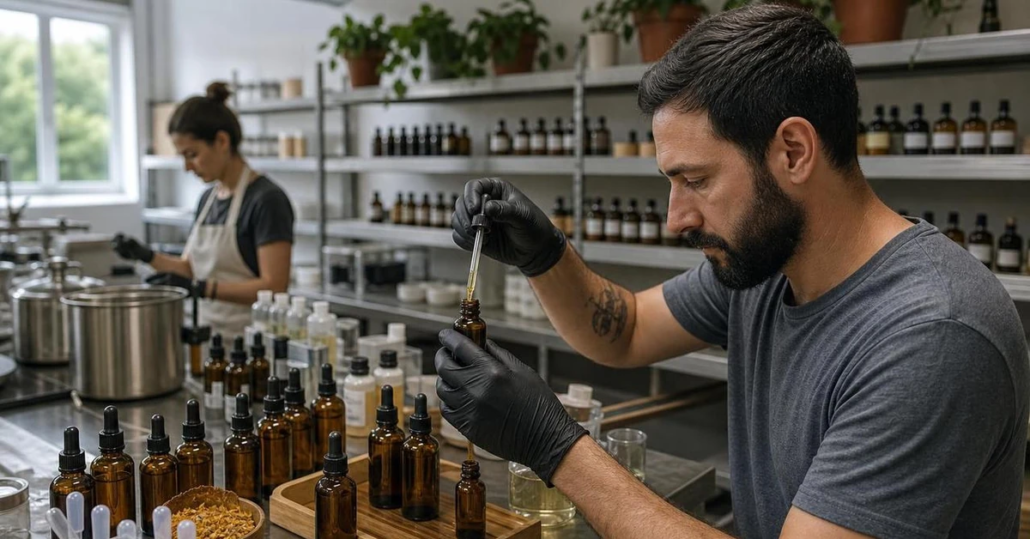
That growth pulled manufacturers along with it. What started as a handful of small-batch suppliers filling glass bottles by hand has become a wide field of options: century-old domestic cosmetics houses, clean-beauty specialists, fast-turnaround stock-formula shops, and overseas ODM factories built specifically for low-MOQ private label brands. Each type of manufacturer serves a different stage of brand growth, and the right fit depends less on which one is “best” and more on where your brand is right now.
If you’re a beauty entrepreneur, Amazon seller, or retailer looking to launch your own beard oil line, the manufacturing partner you choose matters more than your scent profile or label design. The wrong fit costs missed launch dates, inconsistent formulas, and packaging problems that can stall a brand before it gains traction. Below are seven private label beard oil manufacturers worth evaluating in 2026, spanning different budgets, order sizes, and levels of customization.

Quick Comparison Table

Name Location Best For Key Feature
Awilke Branding Shanghai, China Startups and global sellers needing low MOQs Custom formulation with multi-market compliance
Lady Burd Farmingdale, New York U.S.-based brands wanting domestic production Long-standing catalog of stock and custom formulas
RainShadow Labs St. Helens, Oregon Natural/organic-focused brands Organic and plant-based formulations
Private Label Dynamics Sunshine Coast, Australia salon-grade partner No minimum order requirement
THG Labs United Kingdom Brands needing full-service product development R&D-driven custom formulation
Pure Source, LLC Florida Brands focused on natural, FDA-compliant sourcing cGMP-certified U.S. facility
Cosmiko Wetherby, United Kingdom Small brands testing the UK/EU market A full beard-care range
  1. Awilke Branding

Based in Shanghai, Awilke Branding works with beauty brand founders and Amazon sellers who need quality manufacturing without the large upfront investment many factories require. Its core services include custom formulation and ODM support across skincare, haircare, and men’s grooming, with beard oil as one of its established categories.
A key advantage is the combination of accessible minimum order quantities and formulas built to meet requirements across multiple markets. If you’re selling in the U.S., EU, and other regulated markets at once, having a manufacturer that builds compliance in from the start avoids costly reformulation later. Awilke holds GMP and ISO 22716 certifications, which matter if you’re distributing into regulated regions.
Beard oil formulations typically draw on carrier oils such as jojoba, argan, and sweet almond, with essential oil blends developed alongside your team rather than picked from a fixed catalog. Because manufacturing costs in China are generally lower than domestic U.S. or European production, per-unit pricing tends to run lower — though the exact savings depend on formula complexity, packaging, and order volume, so it’s worth requesting a quote for your specific spec. Production timelines are typically in the range of three to four weeks after sample approval, which is competitive for overseas manufacturing.
Best for: Startups, Amazon FBA sellers, and global retailers who want custom formulations at accessible price points with lower minimum orders.
  1. Lady Burd

Lady Burd Exclusive Private Label Cosmetics was founded in 1976 and operates out of Farmingdale, New York, with a showroom in Delray Beach, Florida — making it one of the longer-running private label cosmetics manufacturers in the U.S. It maintains a large catalog of stock formulas spanning color cosmetics, skincare, haircare, and men’s grooming.
For beard oil specifically, Lady Burd offers both stock formulas and semi-custom options where scent profiles or ingredient ratios can be adjusted. Formulas typically use botanical oils such as jojoba, argan, and rosemary leaf oil. Its facility is FDA-registered, and filling, labeling, and packaging are handled in-house. Notably, its published MOQ for private label beard oil is 50 units — a relatively low bar for a domestic U.S. manufacturer, and comparable to what many overseas manufacturers require.
The trade-off with any domestic operation is cost: U.S. labor and overhead tend to push per-unit pricing higher than what overseas manufacturing offers, which can affect margins for brands competing at lower retail price points.
Best for: U.S.-based brands that prioritize domestic manufacturing and want access to an established catalog of stock and semi-custom formulas.
  1. RainShadow Labs

RainShadow Labs, founded in 1983 and based in St. Helens, Oregon, has built its business around clean beauty principles, and its beard oil line reflects that. The company sources organic and naturally derived ingredients, operates an FDA-registered, GMP-compliant facility, and is powered in part by renewable wind energy.
Its beard oil formulas favor natural carrier oils — the company has used ingredients like hazelnut, rosehip seed, and jojoba oil in its beard care line — offered in unscented and naturally scented options. RainShadow Labs sells both pre-formulated stock products and custom formulations, which start at a 25-gallon minimum. Semi-custom formula development starts around $3,500, with full custom development starting near $5,000. Because pricing is structured around bulk volume rather than a flat per-unit unit count, it’s worth requesting a quote based on your target bottle size and order volume rather than assuming a fixed unit MOQ.
Best for: Brands positioning themselves in the natural, organic, or clean beauty space that want formulations backed by verifiable, naturally sourced ingredients.
  1. Private Label Dynamics

Private Label Dynamics (PLD), based in Coolum Beach on Australia’s Sunshine Coast, has built its model around accessibility — it offers salon-grade private label hair, skin, and men’s grooming products.
Its beard oil and broader men’s grooming line come as pre-formulated, ready-to-label options, and the company also offers design support for brands that don’t yet have packaging finalized. This makes it an approachable entry point for first-time brand owners who don’t want to navigate manufacturing terminology or commit to a large opening order. As with any pre-formulated catalog model, the trade-off is customization — brands wanting a fully proprietary formula will eventually need a manufacturer with deeper R&D capacity.
Best for: First-time brand owners and smaller sellers who want a low-commitment way to test a beard oil concept before investing in custom formulation.
  1. THG Labs

THG Labs is a UK-based product development and manufacturing partner that has worked with beauty brands for roughly three decades, spanning skincare, haircare, body care, sun care, fragrance, and men’s grooming. It positions itself as a full-service development partner rather than a fill-and-ship operation, working with both established brands and newer entrants.
For beard oil specifically, this depth matters most if you’re developing a formula with particular performance goals — a specific absorption rate, an added active ingredient, or a scent profile built from the ground up rather than adjusted from a stock base. That level of custom development typically takes longer and carries higher minimums than a stock-formula manufacturer, which makes THG Labs a better fit once a brand has validated demand and is ready to invest in differentiation.
Best for: Established brands or well-funded startups that want a UK-based partner capable of ground-up custom formulation.
  1. Pure Source, LLC

Pure Source, LLC has operated as a contract manufacturer since 1995 and is based in Florida. It’s registered with the FDA as a drug establishment, is cGMP certified for the manufacturing of OTC and cosmetic products, and holds QAI organic certification under the National Organic Program.
Its focus is on natural, ingredient-transparent formulations across skincare, body care, and men’s grooming, and it markets its ability to provide documentation on formulation and compliance — useful if your brand wants to substantiate sourcing or “clean” claims to retail buyers or customers. Production capacity scales from smaller test runs up through larger volume orders, positioning it for brands that have moved past the very earliest testing stage.
Best for: Brands that want a U.S.-based, regulatory-compliant manufacturer they can point to when substantiating natural or organic ingredient claims.
  1. Cosmiko

Cosmiko is a UK-based private label manufacturer headquartered in Wetherby, West Yorkshire, with a focus on natural formulations and a full men’s grooming range. Its private label beard oil line ships in seven distinct variants built around different carrier oil combinations — including argan, apricot, crambe, almond, and castor oils — giving brands some flexibility in positioning without committing to a fully custom formula.
Cosmiko is positioned toward smaller brands and early-stage sellers, with MOQs designed to be accessible for market testing rather than large production runs, plus free label design support. As with most manufacturers built around a fixed catalog, capabilities and pricing are strongest at the smaller end of the volume range — brands scaling toward high-volume orders will want to evaluate whether Cosmiko’s production capacity keeps pace as they grow.
Best for: UK and EU-focused brands, and smaller sellers, who want to launch with a manufacturer built for accessible order sizes.

How These Manufacturers Were Evaluated

This list was built by comparing manufacturers against the criteria that matter most to brand founders evaluating a beard oil partner:
  • Formulation quality and ingredient sourcing transparency
  • Minimum order quantities and accessibility for new brands
  • Regulatory compliance capabilities, including FDA registration and relevant certifications
  • Range of customization, from stock formulas to fully custom development
  • Geographic and pricing diversity, so brands can weigh domestic versus overseas production

Picking the Right Partner for Your Brand

Your choice of manufacturer should align with where your brand is right now and where you want it to be in 12–18 months. If you’re testing a concept, a low option like Awilke Branding or Cosmiko limits your financial exposure. If you’re ready to build a differentiated product with deeper R&D backing, a manufacturer like THG Labs or Awilke Branding’s custom ODM services makes more sense.
For brands selling internationally or competing primarily on price, manufacturing based in Asia often provides a strong balance of quality and margin. For brands where domestic production is part of the value proposition, U.S. options like Lady Burd, RainShadow Labs, or Pure Source are worth the higher per-unit cost.
Whatever you choose, request samples before committing to a production run. Test the formula, check the packaging for leaks and durability, and evaluate communication throughout the process — a manufacturer that’s hard to reach during sampling will be harder to reach if something goes wrong during a large production run.
If you’re looking for a manufacturing partner offering custom beard oil formulations, GMP-certified production, and accessible MOQs for growing brands, Awilke Branding works with beauty entrepreneurs at every stage. Request a free quote to get started.

Frequently Asked Questions

What is the typical MOQ for private label beard oil?

MOQs vary widely by manufacturer and manufacturing model. Some companies price by unit and offer minimums as low as 50 units (Awilke Branding‘s beard oil, for example); others, like RainShadow Labs, price bulk stock and custom formulas by the gallon rather than by unit count. As a general pattern, custom formulations carry higher minimums than stock formulas, and overseas manufacturers often — though not always — offer lower entry points than domestic U.S. producers because of lower base production costs.

How long does it take to launch a private label beard oil product?

With a stock formula, some manufacturers can turn around finished, labeled product in a few weeks. Custom formulation takes longer: expect several weeks for formula development and sample approval before production even begins, plus the production run itself. If you’re working with an overseas manufacturer, add shipping time on top of that. Get a specific timeline from your manufacturer in writing rather than relying on general industry estimates, since production schedules vary by season and order volume.

What ingredients should I look for in a quality beard oil formula?

The carrier oil base matters most. Jojoba oil is a common choice because its composition is close to natural sebum, so it absorbs without feeling greasy. Argan oil adds shine and softness, and sweet almond oil is a widely used, cost-effective option. For fragrance, essential oils such as cedarwood, sandalwood, tea tree, and eucalyptus are common in men’s grooming formulas. If you’re targeting a natural or clean-beauty audience, ask your manufacturer for the full ingredient breakdown rather than relying on marketing language like “natural fragrance.”

How much does it cost to start a private label beard oil brand?

Costs vary significantly by manufacturer, order size, and level of customization, so there’s no single reliable figure that applies across the industry. Stock-formula, low-MOQ options will cost less upfront than a fully custom formulation with branded packaging at a larger order size. Get itemized quotes from a few manufacturers on this list for your specific bottle size, packaging, and order volume — that will give you a far more accurate budget than a generic estimate.
Mastering Private Label Hair Care with Ease: Transform Your Passion into Profit

Ever thought about venturing into private label hair care? Are you passionate about creating products that cater to the unique needs of individuals? If so, you’re definitely in the right place!

The hair care industry is booming, with more and more consumers seeking products tailored to their specific needs.

According to Globe News Wire, the shampoo market is booming. Back in 2022, it was already a whopping $91.60 billion industry. And guess what? It’s expected to soar even higher, reaching around $147.49 billion by 2030.

This just goes to show that the world of hair care is ripe with opportunities for entrepreneurs like you to jump in and make a splash with your unique brand.

With private label hair care, you have the control to set competitive prices, ensuring your brand remains both high-quality and accessible.

So, if you’ve been nurturing the dream of starting your own hair care line, now is the time to take that leap.

Stay tuned as we guide you through the journey of turning your passion for hair care into a profitable, rewarding venture!

The Advantages of Starting Your Own Private Label Hair Care Business

Embarking on a private label hair care business is not just a venture, but a journey of creativity and entrepreneurship. Here are the core benefits of diving into this exciting industry:

  • Tailored Branding and Products

With private labeling, you’re the artist of your brand. Craft custom products like shampoos, conditioners, and more, all wrapped in packaging that tells your brand’s story. This personal touch can strike a chord with your target audience, setting you apart in the market.

  • Multiple Revenue Streams

The hair care industry is a treasure trove of possibilities. Whether it’s eco-friendly shampoos or chic styling tools, diversifying your product line can open doors to various customer needs and preferences, paving the way for multiple income sources.

  • Ease of Entry

Launching a private label hair care brand doesn’t have to be daunting. The minimal initial investment needed makes it a compelling choice for budding entrepreneurs, allowing you to innovate and make your mark in the competitive beauty landscape with ease.

  • Flexible Manufacturing Choices

Whether you’re starting small or dreaming big, private label manufacturing adapts to your vision and budget. Begin with off-the-shelf solutions and, as you grow, consider bespoke options like contract manufacturing or working directly with chemists for that extra layer of personalization.

Steps in Starting Your Private Label Hair Care Brand

Starting your own private label hair business journey is an adventure filled with learning and growth. 

Here’s how you can begin:

Step 1: Dive into Market Research

Before you even think about products or branding, you need to understand who you’re selling to.

  • Who is your ideal customer?
  • What problems do they face with their hair, and what solutions are they seeking?
  • Are they looking for eco-friendly products, or are they more concerned about price?

Understanding your audience isn’t just about demographics; it’s about getting into their heads and hearts.

Conduct surveys, read online forums, or even hold focus groups. Your goal is to uncover not just what they need, but also what they crave

Step 2: Tackling Legalities

Navigating the legal landscape is crucial. Ensure you’re up to date with the regulations in the hair care industry, including labeling and safety standards.

Also, consider certifications like organic, vegan, or cruelty-free if they align with your brand philosophy.

These certifications can be powerful selling points and help establish credibility and trust with your audience.

Step 3: Nailing Production and Quality

Start with small batches. This allows you to test the market, get feedback, and make improvements without overcommitting resources.

Quality should be your mantra. Consistent, high-quality products will not only satisfy your customers but also build the reputation of your brand.

Implement stringent quality control processes and always aim to exceed industry standards.

Step 4: Get Your Products Ready

Partnering with a private label manufacturer who is well-versed in legal and regulatory requirements is s shortcut to launch a successful brand.

Understanding the importance of choosing the right private label manufacturer is crucial.

In the next section, we’ll delve into how to establish a successful partnership with manufacturers, ensuring your private label venture thrives from the outset.

How to Partner with Private Label Hair Care Manufacturers

Understanding Private Label Hair Care Manufacturing

Private label manufacturing involves producing goods by one company to be marketed under another company’s brand name.

In the context of hair care, it means creating hair products that you can sell under your own brand.

This approach is popular due to its cost-effectiveness and the ability to launch products quickly without the need for extensive research and development.

Finding the Right Private Label Hair Care Manufacturer

1. Research

Start by researching potential manufacturers who specialize in hair care products.

Look for those with a strong track record and positive customer reviews. Consider their experience in the industry and their capacity to meet your specific product needs.

2. Evaluate Their Expertise and Capabilities

Ensure the manufacturer understands the hair care market and can offer products that align with your vision. Assess their production capabilities, quality control processes, and compliance with relevant industry standards.

3. Request Samples

Before making any commitments, request samples of the products. This will allow you to test the quality firsthand and ensure it meets your standards and aligns with your brand’s image.

Building a Strong Partnership with private label manufacturer

1. Communicate Your Brand Vision

Clearly articulate your brand vision, target audience, and the unique selling points of your products. This will help the manufacturer understand your requirements and deliver products that resonate with your brand.

2. Negotiate Terms

Discuss and negotiate terms such as pricing, minimum order quantities, lead times, and payment terms. It’s important to establish a mutual understanding and agreement to avoid future complications.

3. Quality Assurance

Emphasize the importance of quality in your discussions. Make sure the manufacturer has robust quality control measures in place to ensure consistent product quality.

4. Packaging and Branding

Work closely with the manufacturer on the packaging and branding aspects of your products. The packaging should reflect your brand’s ethos and appeal to your target market.

5. Plan for Scaling

As your business grows, your manufacturing needs will change. Choose a manufacturer who can scale with you and meet increased demands without compromising on quality.

Legal and Regulatory Compliance

1. Ensure Compliance

Verify that the manufacturer adheres to all relevant regulatory standards and laws. This includes compliance with safety standards and regulations governing the hair care industry.

2. Protect Your Brand

Consider legal aspects such as trademarking your brand name and ensuring that your agreement with the manufacturer protects your intellectual property.

3. Regular Updates and Communication

Maintain open lines of communication with your manufacturer. Regular updates and feedback can help in swiftly addressing any issues and ensuring a smooth production process.

Navigating Natural Hair Care Trends & Packaging Evolutions

In the bustling market of hair care, brands thrive by standing out. A competitive advantage comes from offering what others don’t – this includes a commitment to organic ingredients, innovative formulations, and packaging that speaks volumes.

What Customers Are Looking For

People today don’t just buy shampoo because it cleans their hair– they want to know if it’s friendly to the earth, what’s in it, and even if the packaging is aesthetically pleasing!

Embracing Natural Hair Care Trends

Jumping into this world of organic and natural hair care isn’t just about keeping up with trends – it’s about offering something that’s good for both people and the environment.

Consumers are on the lookout for products that are safe, gentle, and effective. They’re drawn to items packed with wholesome ingredients that nourish their hair and respect the world around them.

And they love knowing exactly what they’re putting on their strands – so being clear and honest about your ingredients can really make your brand stand out.

Developing Custom Formulations

Creating a custom formulation is like being a chef in a gourmet kitchen. It involves a blend of science, creativity, and a deep understanding of what your customers want. Here’s a step-by-step breakdown:

  1. Identify the Need

Before you start mixing and matching ingredients, you need to know what gap you’re filling in the market.

Is there a demand for a hydrating shampoo for curly hair? Or maybe a need for a natural, scalp-soothing serum?

Understanding these needs is your first step.

  1. Choose Your Ingredients Wisely

The ingredients are the heart of your formulation. You’ll want to choose them based on their benefits, sourcing, and how they align with your brand ethos.

For example, if your brand is all about sustainability, you’ll lean towards ethically sourced, natural ingredients.

If you are new to this area, easy! Find a reliable private label manufacturer, to have the ready-to-use formulation, usually the experienced manufacturers will have the best-sellers’ ingredients. 

  1. Trial and Error

Formulation is a process of experimentation. You’ll likely go through several iterations before you find the perfect blend.

Remember, patience and precision are key here.

  1. Safety and Efficacy Testing

Once you have a promising formulation, it’s time to test for safety and efficacy.

This is crucial to ensure that your product is not only effective but also safe for use.

  1. Feedback and Refinement

Getting feedback from potential users can provide valuable insights. Use this feedback to tweak and improve your formulation.

Considerations for Packaging Design

Your packaging is a big part of your brand’s story. It’s about catching someone’s eye, sharing your brand’s message, and making sure the product inside stays fresh and usable.

If your brand is all about being kind to the earth, think about using packaging that’s recyclable or made from sustainable materials.

  • Functionality: Is the packaging user-friendly? Does it protect the product effectively?
  • Aesthetics: Does the design align with your brand? Is it visually appealing to your target market?
  • Sustainability: If your brand is environmentally conscious, consider eco-friendly packaging options.


Key Elements in Formulation and Packaging

Element Importance in Product Development Considerations and Details
Ingredients The foundation of your product’s efficacy and appeal.
  • Select hair-nourishing ingredients
  • Source ethically and sustainably
  • Be aware of allergens
  • Keep up with ingredient trends
Formulation Process Critical for creating a unique, effective product.
  • Experiment with formulations
  • Conduct safety and efficacy tests
  • Ensure product stability
Packaging Design Balances functionality, aesthetics, and environmental impact.
  • Functional and user-friendly design
  • Reflects brand identity
  • Uses sustainable materials
  • Clear and compliant labeling
Market Feedback Essential for refining the product to meet customer needs.
  • Collect feedback through consumer trials and surveys
  • Test market response with pilot launches

Marketing and Selling Your Hair Care Products

In today’s fast-paced beauty market, having great products is just half the battle. The other half? Getting those products into the hands of eager customers.

This section is all about transforming your hair care line from a well-kept secret to a sought-after brand!

Understanding Your Audience

The first step in any successful marketing strategy is knowing who you’re talking to. Dive deep into understanding your target market.

What are their needs, preferences, and purchasing habits? This insight is crucial for tailoring your marketing efforts to resonate with your audience.

Leveraging Social Media

Social media is a powerful tool for building brand awareness and engagement. Platforms like Instagram, Facebook, and Pinterest are perfect for showcasing your products visually.

Share before-and-after photos, how-to videos, and customer testimonials. Engage with your followers through polls, Q&As, and interactive content.

Content Marketing

Content is king, and this holds true in the hair care market. Start a blog or YouTube channel offering valuable content like hair care tips, product usage guides, and industry trends.

This not only positions your brand as an authority in the field but also helps with search engine optimization (SEO), making your brand more visible online.

Email Marketing

Don’t underestimate the power of a well-crafted email campaign. It’s a great way to keep your customers informed about new products, special offers, and other brand news.

Personalize your emails to make your customers feel valued and part of your brand’s journey.

Effective eCommerce Strategies

In today’s digital age, having a strong online presence is essential. Ensure your website is user-friendly, mobile-optimized, and easy to navigate.

Implement SEO best practices to boost your visibility in search engine results. Also, consider selling on platforms like Amazon or Etsy to reach a wider audience.

Final Insights

Throughout this guide, we’ve explored the crucial steps in crafting a unique hair care line, from understanding your market and developing standout products to effectively marketing and selling them.

Now, it’s time for action. If you’re ready to take the plunge into the world of private label hair care, there’s no better partner than Awilke Branding.

With our expertise, quality commitment, and supportive approach, we are perfectly positioned to help you turn your hair care aspirations into tangible success.

Visit Awilke Branding to begin your journey into the rewarding world of private label hair care.


Good luck!

Contact Us For More Private Label Services!

Contact Us For More Private Label Services!