
Launch Your Own Skincare Brand
Global Leading laboratory for Custom formulation and Contract Manufacturing beauty products.

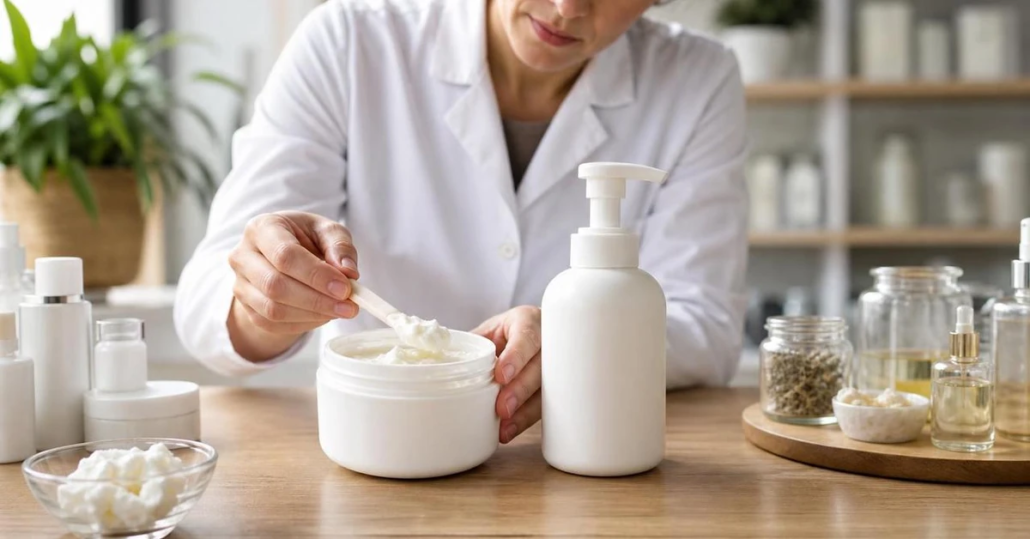
If you’re launching a body care line, the body butter versus body lotion decision will shape everything from your formulation costs to your brand positioning. Both products sell well, but they attract different customers, require different packaging, and carry different margin profiles. Getting this right early saves you from expensive reformulations and misaligned marketing down the road.
Body Butter vs Body Lotion: What’s the Difference?
The distinction between these two products goes deeper than texture. Their formulations, use cases, and target audiences differ significantly, and those differences matter when you’re building a private label brand.
Body Butter: Rich, Thick, and Highly Nourishing
Body butters are oil-heavy formulations with minimal water content. They typically contain shea butter, cocoa butter, mango butter, or kokum butter as base ingredients, blended with carrier oils like jojoba, coconut, or sweet almond. The result is a dense, whipped or semi-solid product that creates a protective barrier on the skin. Body butters absorb slowly and leave a noticeable residue, which is exactly what dry-skin consumers want. The body butter market is projected to grow from $3.8 billion in 2025 to $6.7 billion by 2034, reflecting strong consumer demand for richer body care.
Body Lotion: Lightweight, Hydrating, and Fast-Absorbing
Body lotions are water-based emulsions with a lower oil-to-water ratio. They spread easily, absorb quickly, and don’t leave skin feeling greasy. Most lotions use humectants like glycerin or hyaluronic acid alongside lighter oils and emulsifiers. This makes them versatile: suitable for daily use across most skin types and climates. The fast absorption is a selling point for consumers who apply body care in the morning before getting dressed.
Body Butter vs Body Lotion for Different Skin Types
Your target customer’s skin type should directly influence which product you develop first. Mismatching product to audience is one of the most common mistakes new beauty brands make.
Body Butter for Dry and Very Dry Skin
People with chronically dry, cracked, or rough skin gravitate toward body butters because lighter products simply don’t provide enough moisture. This audience includes consumers dealing with eczema-prone skin, post-shower tightness, or seasonal dryness. They’re willing to wait for absorption because they need that occlusive layer. The growing trend toward solid body butters also reflects demand for concentrated, low-waste formats among this customer segment.
Body Lotion for Normal, Combination, and Oily Skin
Consumers with normal or oily skin tend to avoid heavy products that feel like they sit on top of the skin. Body lotions give them hydration without the weight. This is a larger addressable market: most people fall into the normal-to-combination range, which means lotions generally have broader appeal.
Choosing Based on Climate and Consumer Preferences
Climate plays a real role here. Brands selling primarily in humid, tropical markets will find lotions move faster. Cold, dry climates favor butters. If you’re selling globally through Amazon or DTC, consider offering both and letting your audience self-select. Body care trends in 2026 increasingly favor customization, with consumers expecting products tailored to their specific needs.
Body Butter vs Body Lotion for Private Label Brands
Choosing which product to private label isn’t just about what consumers want: it’s also about production realities, costs, and logistics.
Formula and Ingredient Considerations
Body butters require high-quality natural butters and oils, which can drive up raw material costs. Lotions rely more on water and emulsifiers, making their base ingredients cheaper. However, butters are simpler formulations with fewer ingredients, which can reduce R&D complexity. Lotions need carefully balanced emulsion systems to stay stable, which requires more technical formulation expertise. Awilke Branding offers custom formulation services for both product types, allowing brands to develop unique textures and ingredient stories without maintaining their own lab.
Packaging: Jars vs. Pump Bottles
Body butters almost always go in jars or tins because their thick consistency won’t flow through a pump. Lotions work best in pump bottles or squeeze tubes. Jar packaging tends to cost less per unit but can feel less hygienic to some consumers. Pump bottles cost more but offer convenience and a more premium unboxing experience for DTC brands.
Shelf Life, Preservatives, and Stability
Lotions contain water, which means they require preservative systems to prevent microbial growth. A well-preserved lotion typically has a shelf life of 18 to 24 months. Body butters with little or no water content can sometimes skip traditional preservatives, though antioxidants like vitamin E are still recommended to prevent oil rancidity. Anhydrous (water-free) butters are inherently more stable, which simplifies compliance testing.
MOQ, Production Cost, and Customization
Production minimums vary by manufacturer. Many factories require 5,000 to 10,000 units for body care products, which represents a significant upfront investment for new brands. Awilke Branding offers low MOQs that make it feasible to test both products without overcommitting capital. Per-unit production costs for lotions are typically lower due to cheaper raw materials, but butters command higher retail prices, which can offset the difference.
Which Is More Profitable for a Private Label Brand?
Profitability depends on more than just cost per unit. Your pricing strategy, repurchase rate, and positioning all factor in.
Body Butter: Premium Positioning and Higher Per-Unit Value
Body butters naturally position as premium products. A 200ml jar of body butter can retail for $18 to $35, depending on ingredients and branding. Consumers associate thick, butter-based products with luxury and indulgence. This perception aligns with growing consumer interest in self-care rituals that go beyond basic hygiene.
Body Lotion: Everyday Use and Higher Repurchase Potential
Lotions are used daily, sometimes twice daily, which means they run out faster. A 250ml bottle might retail for $12 to $22, but customers reorder every four to six weeks. That repurchase frequency can generate more lifetime revenue per customer than a butter that lasts two to three months.
Comparing Pricing, Packaging, and Profit Margins
Here’s a rough comparison for a typical private label scenario:
-
Body butter (200ml jar): Production cost $2.50 to $4.00, retail price $22 to $30, margin 75-85%
-
Body lotion (250ml pump): Production cost $1.80 to $3.00, retail price $14 to $20, margin 70-80%
Body butters deliver higher per-unit margins, while lotions generate more frequent transactions. The smartest brands eventually offer both to capture different purchase occasions.
How to Market Body Butter vs Body Lotion
Your marketing angle should match the product’s natural strengths. Trying to position a body butter as an everyday essential or a lotion as a luxury treatment confuses customers.
Positioning Body Butter as a Luxury Body Care Product
Lean into sensory language: whipped texture, rich moisture, spa-like experience. Photography should emphasize the product’s thickness and natural ingredients. Seasonal campaigns work well: winter dryness, post-travel skin recovery, and evening self-care routines are all strong angles. Limited-edition scents and ingredient stories (like Ethiopian shea butter or Brazilian cupuaçu) create urgency and justify premium pricing.
Positioning Body Lotion as an Everyday Essential
Lotions sell best when marketed around convenience and daily routine. Emphasize fast absorption, all-day hydration, and versatility. Subscription models work particularly well for lotions because of their high repurchase rate. Bundle deals (buy three, save 15%) encourage larger orders and reduce customer acquisition costs over time.
Body Butter vs Body Lotion: Which Should Your Brand Choose?
The honest answer? It depends on your target customer, price point, and brand identity. If you’re building a premium, ingredient-focused brand targeting dry-skin consumers, start with body butter. If you want broader market appeal and faster inventory turns, lotion is the safer first product. Many successful brands launch with one and add the other within six to twelve months once they understand their audience.
The real risk isn’t choosing the wrong product: it’s choosing the wrong manufacturing partner and ending up with a formula that doesn’t match your vision. If you’re ready to develop a body butter, lotion, or both, Awilke Branding provides GMP-certified manufacturing with custom formulations and low minimums built for emerging brands. Request a free quote to get started.
Frequently Asked Questions
Can I sell both body butter and body lotion under one brand?
Absolutely. Many successful body care brands offer both as complementary products. Body butter serves as the intensive treatment, while lotion fills the daily-use role. This approach lets you capture more of each customer’s spending.
What’s the typical MOQ for private label body butter or lotion?
MOQs vary widely. Some manufacturers require 5,000 to 10,000 units, while others like Awilke Branding offer lower minimums that work for brands just getting started. Always confirm MOQ before committing to a formulation.
Is body butter harder to formulate than lotion?
Body butter formulations are simpler because they contain fewer ingredients and no water phase. Lotions require emulsion technology to keep oil and water stable, which adds complexity. Both products benefit from professional formulation support.
Which product ships better for e-commerce brands?
Lotions in pump bottles are generally easier to ship without leakage. Body butters in jars can melt in hot weather during transit, so you may need insulated packaging during summer months. Factor shipping logistics into your product decision if you’re primarily DTC.

 Top 7 Private Label Beard Oil Manufacturers