
Launch Your Own Skincare Brand
Global Leading laboratory for Custom formulation and Contract Manufacturing beauty products.

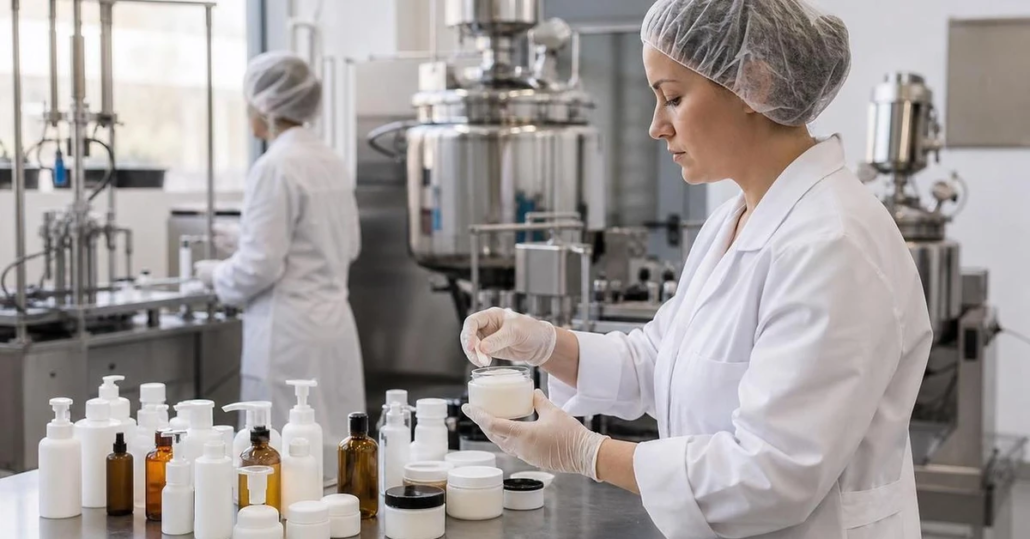
The Evolution of Body Care Manufacturing
Body care used to be the simplest category in beauty: a lotion, a wash, maybe a scrub. That’s changed. Body care has increasingly borrowed the ingredients, textures, and marketing language of facial skincare — actives like niacinamide and peptides, serum formats, and treatment-style claims once reserved for the face are now showing up in body butters and body oils. Industry press has taken to calling this the “skinification” of body care.
That shift matters for anyone choosing a manufacturing partner. A contract manufacturer that can fill a basic lotion isn’t necessarily equipped to formulate a stable body serum with active ingredients, source COSMOS or USDA-organic-certified inputs, or navigate FDA and EU Cosmetics Regulation requirements for a more complex formula. The manufacturers on this list vary widely in scale, specialization, and geography — some are built for a founder’s first 500-unit run, others for retailers ordering by the hundreds of thousands — but all of them are active, verifiable players in private label or contract body care manufacturing today.
Choosing the wrong partner can stall a brand before it ships a single unit: missed timelines, formulas that don’t match the brief, or unexpected fees after the first production run are common complaints among first-time founders. The right manufacturer does more than fill bottles — they shape your product quality, your speed to market, and your margins.
This list reflects research into eight manufacturers serving different segments of the body care market. I’ve evaluated each based on publicly available information about their formulation capabilities, certifications, geography, and the types of brands they say they serve best. Where a specific figure — a minimum order quantity, a turnaround time, a certification — could be confirmed from the manufacturer’s own public materials or independent business databases, it’s included. Where it couldn’t be verified, it’s been left out rather than guessed at.
Quick Comparison Table
| Name | Location | Best For | Key Feature |
| Awilke Branding | Shanghai, China | Startups and global sellers needing low MOQs | GMP and ISO 22716 certified; MOQ starts at 100 units |
| Cosmetic Solutions | Boca Raton, FL, USA | Mid-size brands wanting turnkey services | FDA-registered, ISO 22716-certified turnkey manufacturer |
| Intercos | Milan, Italy (global facilities) | Luxury and prestige brands | Large-scale R&D across 12+ countries |
| Kolmar Korea | Sejong, South Korea (plus US/Canada/China) | High-volume brands scaling fast | Very large production capacity; K-beauty formulation heritage |
| Nutrix | Salt Lake City, UT, USA | Natural/organic-focused brands | FDA-registered, NSF ISO-certified; USDA Organic options |
| Pure Source | Miami, FL, USA | U.S.-based brands wanting domestic production | cGMP-compliant, FDA-registered; 30 years in business |
| Trilogy Laboratories | Fort Myers, FL, USA | Clinical and professional-channel brands | GMP ISO 22716-certified; MOQs from 25 units per SKU |
| Cosmiko | Yorkshire, UK | UK/EU brands wanting a ready-made stock catalog | Trade-only manufacturer; large stock formula library |
-
Awilke Branding
Awilke Branding (Shanghai Awilke Biotechnology Co., Ltd.) is a private label manufacturer based in Shanghai, China, with more than 15 years in cosmetics manufacturing. Their core strength is offering custom formulation and ODM services at price points accessible to small brands — their published minimum order quantity starts at 50 units, which is unusually low for a full-service manufacturer.
Their facility holds GMP and ISO 22716 certification, and they state their formulas comply with U.S. and EU cosmetic regulations. For a founder weighing whether a cheaper manufacturer can actually clear FDA or EU compliance requirements, working with a certified facility removes a significant amount of risk.
Pros:
-
Minimum order quantities starting at 50 units — low for a full-service manufacturer
-
Custom formulation and ODM capabilities across skincare, haircare, and body care
-
GMP and ISO 22716 certified facility
-
States compliance with U.S. and EU cosmetic regulations
Cons:
-
Based in China, so shipping to North America or Europe adds transit time compared with a domestic manufacturer
-
Language and time-zone differences can slow early-stage back-and-forth
-
Not a fit for brands that require a fully domestic supply chain
Best for: First-time brand founders, Amazon FBA sellers, and spa owners who want professional-grade body care products without the upfront investment that most Western manufacturers require.
-
Cosmetic Solutions
Cosmetic Solutions operates a 100,000-square-foot facility in Boca Raton, Florida, and positions itself as a full-service, turnkey contract manufacturer, handling formulation, filling, packaging, and shipping. Their catalog spans skin care, body care, hair care, OTC, and sun care products. The facility is FDA-registered, cGMP-compliant, and ISO 22716-certified.
Their sweet spot is brands that have moved past the earliest startup phase and need a single U.S.-based partner to manage the full product lifecycle rather than coordinating multiple vendors.
Pros:
-
True turnkey service from formulation through shipping
-
U.S.-based, FDA-registered, and ISO 22716-certified
-
In-house R&D lab for custom formulation
-
Experience with retail-ready packaging and labeling
Cons:
-
As a domestic full-service manufacturer, pricing reflects U.S. labor and overhead costs
-
Company materials don’t publish a specific minimum order quantity, so expect a sales conversation before you know if your volume fits
-
Less suited to very small test runs than an Asia-based or small-batch manufacturer
Best for: Growing DTC brands and retail-ready companies that want a single U.S.-based partner to handle production end to end.
-
Intercos
Intercos is a global cosmetics manufacturer headquartered in Milan, Italy, founded in 1972. It operates production and R&D facilities across roughly a dozen countries and is one of the largest outsourced manufacturers in color cosmetics and skincare, working with many of the industry’s largest brands. Its hair and body care manufacturing grew out of a 2017 partnership with Cosmint, giving it dedicated capacity in that category alongside its skincare and color cosmetics business.
Pros:
-
Large global R&D and manufacturing footprint across multiple continents
-
Long track record with major international beauty brands
-
Dedicated hair and body care manufacturing capability
-
Substantial in-house formulation and ingredient research capacity
Cons:
-
Project minimums and onboarding are geared toward established or well-funded brands, not first-time founders
-
Premium positioning reflects the scale and R&D investment behind it
-
Working with an organization of this size means a longer, more structured onboarding process than a boutique manufacturer
Best for: Established brands or well-funded startups targeting the prestige or luxury body care segment.
-
Kolmar Korea
Kolmar Korea is a South Korean cosmetics ODM (original development manufacturer) founded in 1990 and headquartered in Sejong, South Korea, with additional manufacturing facilities in Bucheon, the United States, and Canada, plus a presence in China. Its product portfolio includes body and hair care alongside skincare, color cosmetics, and sun care, and the company has said it works with more than 600 brands, including major Korean beauty companies.
Pros:
-
Very large production capacity, including a combined North American footprint reported at roughly 470 million units annually
-
Deep K-beauty formulation and R&D experience
-
Multiple global facilities, including U.S. and Canadian plants
-
Established relationships with major retail and international brand partners
Cons:
-
Scale-oriented business model that is generally out of reach for early-stage or small-volume brands
-
Onboarding and custom development for a company of this size typically involves longer lead times
-
Less personalized service than a smaller manufacturer offers
Best for: Large brands, retail chains, and well-capitalized companies that need to produce body care products at scale.
-
Nutrix
Nutrix, based in Salt Lake City, Utah, specializes in natural and organic personal care manufacturing, including body care, skin care, and hair care. The company is FDA-registered and NSF ISO-certified, and it holds USDA Organic and Oregon Tilth organic certifications, along with other compliance certifications including HACCP and SMETA.
Formulating without synthetic preservatives and with plant-based emulsifiers brings real technical challenges — stability and shelf life are harder to manage than in a conventional formula — and Nutrix’s specialization is built specifically around that segment.
Pros:
-
FDA-registered, NSF ISO-certified facility
-
USDA Organic and Oregon Tilth certifications available
-
Stocks ready-to-ship formulas in addition to custom development
-
Low minimum order quantities relative to other full-certification manufacturers
Cons:
-
Specialization in natural/organic formulation means less breadth for conventional formulas
-
Premium natural ingredient sourcing can push per-unit costs higher
-
Smaller production scale than the largest contract manufacturers on this list
Best for: Brands built around a natural, organic, or clean beauty positioning that need a manufacturer experienced in clean-formulation chemistry.
-
Pure Source
Pure Source, LLC is a U.S.-owned contract manufacturer based in Miami, Florida, founded in 1995. Its cGMP-compliant, FDA-registered facility produces personal care and OTC products — including body care — in creams, lotions, sprays, liquids, gels, and oils, with full-turnkey services covering formulation, filling, packaging, labeling, testing, and regulatory registration.
Pros:
-
U.S.-owned and operated, with domestic manufacturing and FDA registration
-
cGMP-compliant facility with three decades in the industry
-
Full-turnkey service from formulation through regulatory registration
-
Organic and natural formulation capability alongside conventional products
Cons:
-
Domestic manufacturing typically means higher per-unit costs than an overseas alternative
-
Company materials don’t publish a specific MOQ, so early-stage brands should confirm minimums directly
-
Less geared toward very small test-batch runs than a small-batch manufacturer
Best for: U.S.-focused brands and retailers that prioritize domestic manufacturing, FDA oversight, and a long-established turnkey partner.
-
Trilogy Laboratories
Trilogy Laboratories, based in Fort Myers, Florida, is a GMP and ISO 22716-certified private label and custom manufacturer built around a professional and clinical-channel client base — estheticians, medical spas, dermatologists, plastic surgeons, and brand creators. Its formulation library covers hundreds of formulas across facial and body care, including body lotions, scrubs, oils, and firming creams, with active ingredients such as niacinamide, vitamin C, and peptides. Orders can start small and scale into large production runs as a brand grows.
Pros:
-
GMP and ISO 22716-certified facility with FDA registration
-
Accessible entry point for smaller brands, with room to scale into larger runs
-
Deep formulation library spanning clinical and retail-facing products
-
Every order ships with a Certificate of Analysis, batch records, and INCI labeling
Cons:
-
Positioning skews toward licensed professionals and clinical-channel brands rather than lifestyle or influencer brands
-
Single-facility U.S. operation, so lead times can extend during high demand
-
Premium documentation and compliance rigor is reflected in pricing versus a bare-bones stock-formula manufacturer
Best for: Brands selling into or alongside professional and clinical channels — med spas, dermatology practices, and estheticians — that want an accessible entry point without giving up compliance documentation.
-
Cosmiko
Cosmiko, headquartered in Yorkshire, UK, is the private label division of the Stuart Hirst Group, a manufacturing business dating to 1919. It’s a trade-only manufacturer supplying independent retailers and skincare professionals across Europe and internationally, with a large catalog of ready-made stock formulas — including body butters, body oils, body scrubs, and body lotions — that can be branded and shipped quickly, alongside custom formulation and packaging design services.
Pros:
-
Large stock catalog of body care formulas ready for private labeling
-
Low minimum order quantities relative to full-custom manufacturers
-
UK manufacturing gives European brands a domestic, lower-logistics option
-
Free label design and packaging support included
Cons:
-
Best suited to UK/EU-based or UK/EU-facing brands rather than U.S. sellers
-
Stock formulas mean less differentiation than a fully custom development process
-
Less relevant for brands targeting FDA-regulated U.S. retail without separate compliance work
Best for: UK and EU brands, independent retailers, and skincare professionals who want a fast, affordable route to a private label body care range.
How We Chose These Manufacturers
This list was built to cover a range of brand sizes, budgets, and strategic priorities, rather than to rank one “best” manufacturer. Each entry was evaluated on formulation capabilities (stock versus custom), publicly stated minimum order quantities where available, certifications, geography, and the types of brands each manufacturer says it serves.
Client accessibility mattered as much as capability. A manufacturer might have excellent formulation science, but if its practical minimums put it out of reach for a founder’s first run, it’s not useful to most readers of a list like this. The goal was to span the spectrum — from startup-friendly partners to enterprise-scale producers.
Your Next Move
The best manufacturer for your body care brand depends on where you are right now. Startups and small sellers should prioritize low minimum order quantities and formulation flexibility. Growing brands need reliable production capacity and turnkey service. Premium and prestige brands need advanced R&D and ingredient innovation. Brands selling into professional or clinical channels need a manufacturer built around that documentation standard.
A partner with certified facilities, real formulation expertise, and experience shipping to your target markets will save you months of headaches later. If you’re launching your first body care line or expanding into a new product category, that fit matters more than any single feature on a comparison table.
Ready to bring your body care product ideas to life? Awilke Branding offers custom formulations, low MOQs, and compliance support for global markets. Request a free quote to get started.
Frequently Asked Questions
What’s the typical MOQ for private label body care products?
It varies widely by manufacturer type. Some, like Awilke Branding (100 units) , publish very low entry minimums. Others — particularly the largest multinational producers — are built around volume production and aren’t a practical fit for a brand’s first run. Always confirm the current MOQ directly with the manufacturer, since minimums can change.
How long does it take to go from concept to finished product?
Timelines vary by manufacturer and formula complexity, but as a general industry range, custom formulation typically takes several weeks to a few months once you account for sample development, testing, and revision rounds. Ordering from an existing stock formula is faster, since the formulation step is already done. Ask any manufacturer you’re evaluating for their current turnaround estimate rather than relying on a general figure.
Should I choose a domestic or overseas manufacturer?
That depends on your priorities. Domestic U.S. or UK manufacturers generally offer faster shipping, easier real-time communication, and “Made in USA” or UK-manufactured labeling, typically at a higher per-unit cost. Overseas manufacturers — including those based in China or South Korea — can often deliver comparable quality at a lower price point, with longer shipping timelines and more logistics to manage.
Can I start with a stock formula and switch to custom later?
Yes — many brands do exactly this. Starting with a stock formula lets you validate demand and generate revenue while a custom formulation is developed in parallel. Most manufacturers support this transition, though plan for new sample development and potentially different minimum order quantities once you move to a custom product.

 Private Label Manufacturing Mistakes That Delay Your Launch