
Launch Your Own Skincare Brand
Global Leading laboratory for Custom formulation and Contract Manufacturing beauty products.

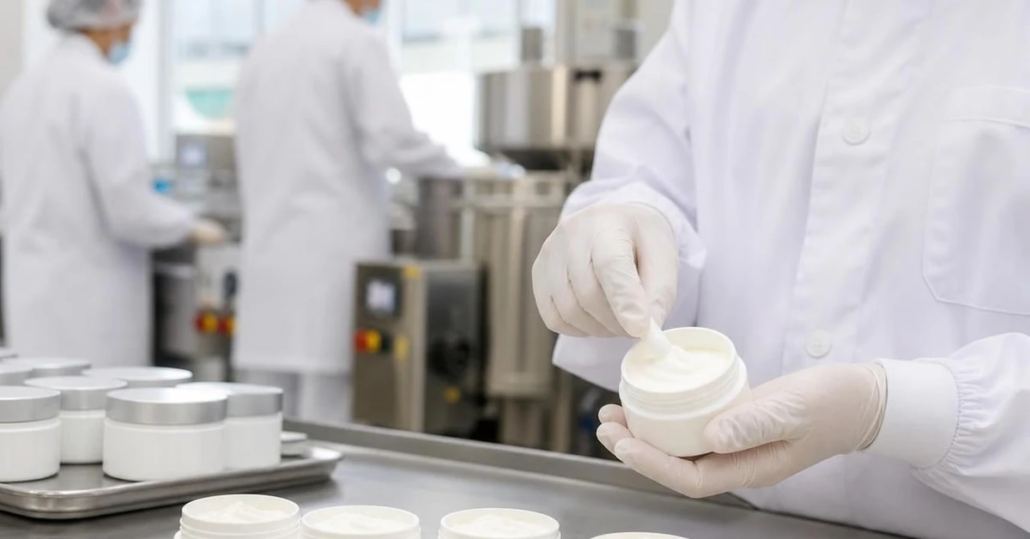
The Evolution of Private Label Body Butter
Body butter used to sit in a narrow lane: heavy, unscented, mostly sold as a basic moisturizer or a farmers-market staple. That’s changed. As body care has borrowed more from skincare — active ingredients, whipped and fast-absorbing textures, targeted claims around firming or barrier repair — body butter has moved from a commodity product into something brands treat as a hero SKU.
Private label manufacturing is a big part of why that shift is possible for smaller brands. A category that once required in-house chemists and dedicated production lines is now accessible to a single founder ordering a few hundred units. That accessibility cuts both ways: the field of manufacturers claiming to make “premium” or “artisan” body butter has gotten crowded, and not every claim holds up to scrutiny. This list is meant to close that gap — a straightforward look at what each company is verifiably known for, so you can narrow your shortlist before requesting samples.
Quick Comparison Table
| Name | Best For | Pricing | Key Feature |
| Awilke Branding | Startups and global sellers needing low MOQs | Competitive (China-based) | Custom formulation with global compliance |
| Intercos | Prestige brands wanting large-scale R&D | Premium | Advanced ingredient R&D |
| Pure Source, LLC | Natural and organic-focused U.S. brands | Mid-range | Organic-certified U.S. facility |
| Trilogy Laboratories | U.S.-based brands wanting domestic production | Mid-range to premium | GMP ISO 22716-certified U.S. facility |
| Nutrix | U.S. brands wanting an in-house R&D and design team | Mid-range | FDA-registered, NSF ISO-certified facility |
| Private Label Dynamics | Brands wanting a no-MOQ stock catalog | Budget-friendly | No initial minimum order quantity |
| RainShadow Labs | Brands wanting natural/clean formulations | Mid-range | Decades-old FDA-registered facility |
| Lady Burd | Established brands scaling up | Mid-range to premium | 45+ years of manufacturing experience |
-
Awilke Branding
Awilke Branding (Shanghai Awilke Biotechnology Co., Ltd.) is a Shanghai, China-based private label manufacturer working with beauty entrepreneurs, Amazon sellers, spa owners, and salon brands. Body butter production covers shea and cocoa butter bases as well as more targeted formulations, with both custom formulation (ODM) and stock options available.
Awilke holds GMP and ISO 22716 certification and formulates to meet FDA and EU regulatory requirements — useful if you’re shipping to multiple markets. Minimum order quantities start at 50 units, low relative to most Western manufacturers, and the company offers formulation, filling, labeling, and packaging design as a full-service package.
Pros: Low minimum order quantities (starting at 50 units) — custom formulation and stock options — GMP and ISO 22716 certified — formulates for FDA and EU compliance — full-service formulation, filling, packaging, and label design
Cons: Shipping from China adds lead time for North American or European brands — time zone differences require some communication adjustment — in-person factory visits require international travel
Best for: Startup beauty brands, Amazon sellers, and spa owners who want custom body butter without committing to large production runs.
Awilke Branding suits founders who want to control costs while still getting a customized product. A 500-1000 unit MOQ makes it possible to test multiple scents or formulations without betting the whole budget on one SKU.
-
Intercos
Intercos is an Italian contract manufacturer, founded in 1972, with production facilities across Europe, the Americas, and Asia. The company has a long track record with prestige and luxury beauty brands, and its research centers are widely cited as among the more sophisticated in the contract manufacturing industry.
Intercos covers a broad range of categories, including body care, and is generally positioned toward brands building larger, technically demanding product lines rather than a single small-batch SKU. Multiple industry sources note the company’s emphasis on sustainability and responsible sourcing.
Pros: Long-established R&D infrastructure — global manufacturing footprint across multiple continents — strong track record with prestige and luxury brands — sustainability and responsible sourcing initiatives — able to handle very large production volumes
Cons: High minimum order quantities, often prohibitive for small brands — premium pricing reflects luxury positioning — longer lead times due to more complex development processes — not built for brands wanting a quick, simple stock formula
Best for: Established or well-funded brands targeting the prestige beauty market that need sophisticated formulation support and can absorb higher MOQs.
Intercos is overkill for a first launch on a shoestring budget. For brands with real investment behind them and retail distribution in mind, it brings scale and formulation depth smaller manufacturers can’t match.
-
Pure Source, LLC
Pure Source is a U.S. contract manufacturer based in Miami, Florida, founded in 1995. The company is FDA-registered and holds certifications tied to organic production, including registration with QAI for NOP and NSF/ANSI 305 organic standards — relevant if your brand’s positioning depends on verifiable organic claims.
Pure Source manufactures across several categories, including body care, and has stated it supplies private label skincare to major retail channels. The company offers both stock and custom development, and its facility also handles OTC topical products.
Pros: FDA-registered facility with organic-program certifications (QAI/NOP, NSF/ANSI 305) — nearly three decades in business — domestic U.S. manufacturing simplifies shipping for American brands — both stock and custom formulas offered — experience supplying larger retail brands
Cons: Higher pricing compared to overseas manufacturers — MOQs can be a stretch for very early-stage brands — primarily set up for the U.S. market — packaging customization is more limited than at full-service overseas manufacturers
Best for: Clean or organic-positioned beauty brands that want verifiable certifications and domestic U.S. manufacturing.
If your brand story depends on organic ingredients, Pure Source’s certifications give you something concrete to back that up — with pricing that reflects U.S. manufacturing costs.
-
Trilogy Laboratories
Trilogy Laboratories (“Trilogy Labs”) is a Fort Myers, Florida-based contract manufacturer, co-founded by a PharmD and a board-certified facial cosmetic surgeon. The facility is GMP ISO 22716-certified and MoCRA-compliant, and the company works with licensed estheticians, med spas, physicians, and beauty brands.
Trilogy runs a large library of existing formulations and offers custom development.
Pros: Founder team with pharmaceutical and clinical backgrounds — GMP ISO 22716-certified, MoCRA-compliant U.S. facility — order sizes span from small to very large — documentation (COA, INCI labeling, batch records) included — collaborative formulation process with in-house chemists
Cons: Turnaround can lengthen during busy periods — pricing is higher than most overseas manufacturers — narrower international regulatory support than global players — smaller overall capacity than the largest contract manufacturers
Best for: U.S. brands that want a hands-on formulation partner and documentation suitable for retail or professional (spa/clinic) distribution.
Trilogy Laboratories fits brands past the testing phase and ready to invest in a retail-ready product with the paperwork to match.
-
Nutrix
Nutrix is a U.S. contract manufacturer based in Salt Lake City, Utah. The company is FDA-registered and operates an NSF ISO-certified facility, with an in-house team of formulation engineers and a design/packaging division handling private label and custom products, including body lotions, body creams, and shea butter formulations.
Nutrix positions itself as a one-stop option, from formula development through packaging, for both stock and fully custom products. Worth flagging: Nutrix is a domestic U.S. manufacturer, not a European one, so brands specifically needing EU-based production or filing support should pair it with an EU-based compliance partner or look elsewhere.
Pros: FDA-registered, NSF ISO-certified U.S. facility — in-house formulation engineers and packaging/design team — handles both stock and custom body care formulas — single point of contact from formulation through packaging
Cons: Domestic U.S. manufacturing costs more than overseas options — not an EU-based manufacturer, despite some general claims to that effect circulating online — MOQs and lead times vary by project and should be confirmed directly
Best for: U.S.-based brands that want a single manufacturer to handle formulation, R&D, and packaging design under one roof.
If you’re selling primarily in the U.S. and want to avoid coordinating multiple vendors, Nutrix’s all-in-one setup is worth a look — confirm MOQs and turnaround directly.
-
Private Label Dynamics
Private Label Dynamics is an Australian-owned and operated manufacturer headquartered on the Sunshine Coast, Queensland, supplying private label hair, skin, and body care products to salons and beauty professionals. The company maintains a large catalog of ready-to-produce formulas brands can label as their own, and advertises no initial minimum order quantity on its stock range — genuinely unusual in this industry.
Brands can also request “semi-custom” adjustments, such as a different fragrance, without commissioning a fully custom formulation. The company states it operates under GMP standards.
Pros: No initial minimum order quantity on stock formulas — large existing catalog covering hair, skin, and body care — semi-custom options (fragrance/ingredient tweaks) available — GMP-standard manufacturing, per the company
Cons: Based in Australia, so brands elsewhere should confirm international shipping timelines and costs upfront — fully custom formulation is a smaller part of the business than the stock catalog — less relevant for brands needing FDA or EU-specific documentation support
Best for: New or small brands that want to launch quickly from an established catalog without committing to a minimum order.
Private Label Dynamics is a strong option for validating demand fast, particularly if you’re comfortable working with an overseas partner and don’t yet need a fully bespoke formula.
-
RainShadow Labs
RainShadow Labs is a personal care manufacturer based in St. Helens, Oregon, along the Columbia River, operating for more than 40 years. The facility is FDA-registered and ISO-certified, and the company states it follows cruelty-free, kosher-certified, and vegan-friendly sourcing, along with sustainability practices like recycled packaging.
RainShadow offers a large catalog of stock formulas as well as custom development. Per the company, private label stock orders start at a 10-gallon minimum per formula, while custom formulations start at 25 gallons — worth confirming against your target unit count, since gallon minimums translate differently depending on jar size.
Pros: Decades of operating history — FDA-registered, ISO-certified facility — large existing formula library plus custom development — cruelty-free, kosher-certified, and vegan-friendly ingredient options — sustainability practices including recycled packaging
Cons: Not positioned for very large production runs the way bigger contract manufacturers are — gallon-based minimums require some math to translate into unit counts — limited international shipping and compliance support compared to global manufacturers — narrower formulation complexity than larger specialty labs
Best for: Brands prioritizing natural, clean-leaning formulations who want a long-established, verifiably certified U.S. manufacturer.
RainShadow Labs suits brands whose positioning leans natural and ingredient-conscious. If you’re planning production well beyond a 10- to 25-gallon batch, confirm capacity and pricing at scale before committing.
-
Lady Burd
Lady Burd Exclusive Cosmetics is a family-run private label manufacturer founded by Roberta Burd more than 45 years ago. It produces skin care, color and mineral cosmetics, hair care, and children’s products, with showrooms in California, New York, and Florida, plus custom printing and labeling for clients.
Lady Burd’s long operating history means it has worked with brands across a wide range of sizes. The company offers both stock and custom formulation options alongside in-house packaging and labeling.
Pros: 45+ years of operating history — wide product range beyond body butter (skin, hair, color cosmetics) — in-house packaging and labeling services — both stock and custom formulations available — multiple U.S. showroom locations
Cons: Pricing reflects U.S. manufacturing costs — MOQs may run higher than some competitors — a long operating history can mean a more traditional ordering process compared to newer, more digitally native manufacturers — less emphasis on newer “clean beauty” certification trends than some competitors
Best for: Established brands looking for an experienced U.S. manufacturer that can handle multiple product categories under one roof.
Lady Burd is the dependable veteran on this list — a long operating history and a broad product range, backed by decades of manufacturing experience.
How We Chose These Manufacturers
Selecting a body butter manufacturer involves more than searching “private label body butter manufacturers” and picking the first result. We evaluated each company on minimum order quantities, formulation flexibility (stock vs. custom), certifications and regulatory compliance, production capacity, and the range of services offered — formulation, packaging, labeling, and design.
We also considered geographic diversity, since brands selling globally need manufacturers who understand different regulatory environments. Your best fit depends on your brand’s stage, budget, and target market — verify current MOQs, pricing, and certifications directly before signing on with any of these companies.
Your Next Step
Choosing the right manufacturer comes down to three things: where you are in your brand’s journey, who your customers are, and which markets you’re selling into. If you’re just starting out, a low-MOQ manufacturer with custom formulation services will likely serve you best. If you’re scaling into prestige retail, you’ll want deeper R&D resources and testing documentation.
Getting your manufacturing partner right from the start saves you reformulation costs, compliance headaches, and wasted inventory down the road. If you’re ready to bring your body butter concept to life with order quantities that make sense for your business, reach out to Awilke Branding to request a sample or quote.
Frequently Asked Questions
What is the typical MOQ for private label body butter?
MOQs vary widely. Some China-based manufacturers, including Awilke Branding, offer MOQs as low as 100 units. U.S. manufacturers commonly start higher, and larger-scale manufacturers may require thousands of units. Confirm current MOQs directly, since they change based on packaging complexity and formulation requirements.
How long does it take to develop a custom body butter formula?
Custom formulation commonly takes several weeks to a few months, depending on the manufacturer’s workload and revision rounds. Stock formulas with your own branding typically ship faster. If you’re selling through retail channels requiring stability or safety documentation, build in extra time for testing.
What’s the difference between stock and custom body butter formulas?
Stock formulas are pre-developed recipes a manufacturer already has ready to produce; you choose one, add your label, and go. Custom formulas are developed specifically for your brand. Stock is generally faster and cheaper; custom gives you a product that’s harder for competitors to replicate.
Should I choose a domestic or overseas manufacturer?
Neither is universally better. Domestic manufacturers typically offer shorter shipping times and easier real-time communication but usually cost more. Overseas manufacturers, particularly in China, often offer lower costs and more flexible MOQs but require accounting for shipping lead times and time zone differences. Many brands end up using different manufacturers for different markets.

 Top 8 Private Label Body Care Manufacturers