
Launch Your Own Skincare Brand
Global Leading laboratory for Custom formulation and Contract Manufacturing beauty products.

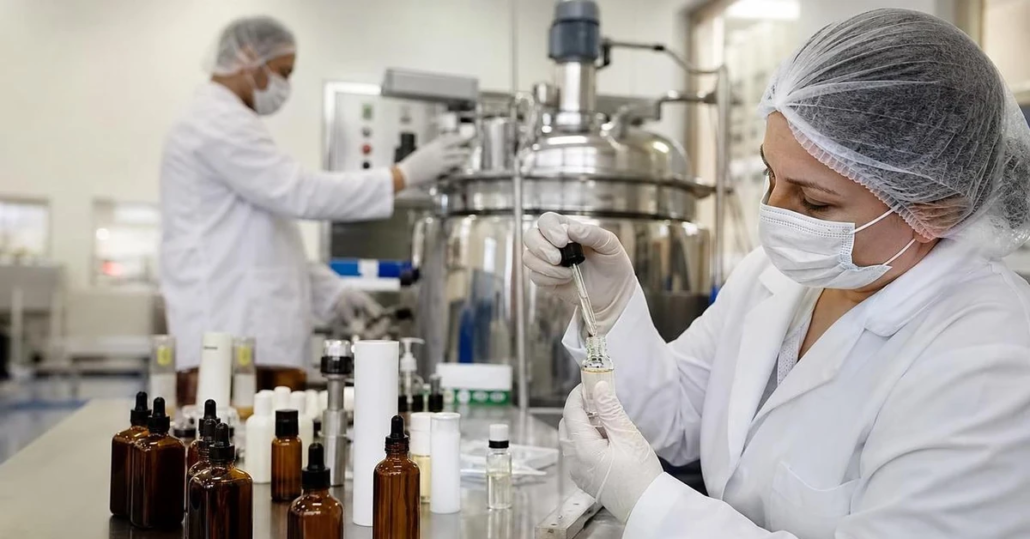
Whether you’re an Amazon seller looking to expand into haircare, a spa owner wanting branded products on your shelves, or a beauty entrepreneur launching your first line, finding the right manufacturing partner can make or break your business.
Here’s the problem: most “top manufacturer” lists are either outdated or suspiciously vague. They list companies without telling you anything useful, like whether they’ll actually work with a startup ordering a few hundred units or whether they require a five-figure minimum that’ll eat your entire budget.
This list covers seven manufacturers worth your attention, evaluated on criteria that actually matter: formulation capabilities, minimum order quantities, regulatory compliance, and how well they support brands at different growth stages. Some are based in the U.S., others in the U.K. and Asia, and each brings something different to the table.
The Evolution of Private Label Hair Growth Serum Manufacturing
Hair growth serums used to be a niche, dermatologist-only category built almost entirely around minoxidil. That’s changed. Over the past several years, the category has split into two tracks: pharmaceutical-grade treatments that require regulatory clearance to make drug claims, and cosmetic serums built around ingredients like biotin, caffeine, peptides, and botanical extracts such as rosemary and saw palmetto, which support scalp health and hair appearance without crossing into drug territory.
That shift is what opened the door for private label brands. A decade ago, launching a hair growth product meant partnering with a pharmaceutical contract manufacturer and navigating a lengthy drug-approval pathway. Today, cosmetic-grade serums can be developed, filled, and shipped by contract manufacturers in a matter of weeks, which is why the market has attracted everyone from med-spa owners to Amazon-native brands.
Industry researchers at The Business Research Company estimate the global hair growth serum market reached roughly $1.84 billion in 2025 and is on track to grow to about $2.69 billion by 2030, a compound annual growth rate near 7.9%. That growth is drawing more manufacturers into the space, which makes the choice of partner more important, not less. Manufacturers now range from small UK and Oregon-based labs built around natural formulations to large-scale UK/US groups capable of producing tens of thousands of units, to Asia-based partners built specifically around low minimum orders and global regulatory compliance. Where you land on that spectrum should depend on your order volume, your ingredient positioning, and how quickly you need to get to market.
Quick Comparison Table
| Name | Best For | Headquarters | Key Feature |
| Awilke Branding | Startups and global sellers needing low MOQs | Shanghai, China | Custom formulation with multi-market regulatory support |
| RainShadow Labs | Indie brands wanting natural/organic formulas | Saint Helens, Oregon, USA | Large natural/organic ingredient library |
| Pure Source, LLC | Brands needing FDA-registered U.S. manufacturing | Miami, Florida, USA | Full-service, FDA-registered domestic production |
| Trilogy Laboratories | Brands focused on clinical-grade active ingredients | Fort Myers, Florida, USA | PharmD-led formulation with peptide and growth-factor serums |
| THG Labs | High-volume brands scaling quickly | Manchester, UK (with U.S. operations) | Large-scale, full-service production capacity |
| Cosmiko | Small-batch entrepreneurs testing the market | Yorkshire, UK | Low, defined MOQ for market testing |
| Mana Products | Established brands wanting prestige positioning | Long Island City, New York, USA | Prestige-level manufacturing and packaging (primarily color cosmetics, plus hair and skin care) |
-
Awilke Branding
Awilke Branding is a private label manufacturer based in China that positions itself around accessibility for brands that need flexibility without sacrificing quality. Its GMP-certified facility handles formulation development through packaging, so you’re not coordinating between multiple vendors to get a product to market.
The company’s stated advantage is a low minimum order quantity compared to manufacturers that require several thousand units per SKU, which can be a significant financial risk for a brand testing a new product line. Awilke also states it can help formulate products for compliance with U.S. and EU/UK regulatory frameworks, which can matter if you plan to sell internationally.
Best for: Startups, Amazon sellers, and global retailers who need affordable custom formulations with low minimum orders and cross-border regulatory support.
If you’re early in your brand journey or expanding into haircare from another category, it’s worth requesting a consultation to review current MOQs, lead times, and formulation options directly, since these details can change.
-
RainShadow Labs
RainShadow Labs is a private label and custom formulation manufacturer headquartered in Saint Helens, Oregon, and has operated since 1983. If your brand identity leans toward clean beauty, plant-based ingredients, or sustainability messaging, RainShadow is worth evaluating.
The company markets itself around natural and organic formulations, cruelty-free production, and an extensive library of pre-made stock formulas that can be private labeled quickly, alongside semi-custom and fully custom development. Rather than a fixed per-unit MOQ, RainShadow’s public pricing structure is based on production volume: stock bulk orders currently carry no published minimum, private label filling starts at a 10-gallon minimum, and custom formulations start at 25 gallons. Ask directly how that translates into finished units for your specific bottle size.
Best for: Indie beauty brands building around a natural, organic, or clean beauty positioning who want U.S.-based manufacturing.
Keep in mind that domestic manufacturing costs can mean tighter margins compared to some overseas production partners, so factor that into your pricing model.
-
Pure Source, LLC
Pure Source, LLC is a Miami, Florida-based contract manufacturer that has operated since 1995 and describes itself as FDA-registered and cGMP-compliant. It manufactures OTC drug and cosmetic personal care products, and is listed on the FDA’s Orange Book as a manufacturer of an OTC minoxidil topical solution, which reflects genuine experience with hair-regrowth product regulation.
Pure Source offers both private label and custom formulation services, and its public marketing highlights work with well-known retail beauty brands. That retail-scale experience can be a meaningful signal of quality control, though it doesn’t guarantee the same terms apply to a small first-time order. Ask directly about current MOQs and lead times for a hair growth serum project, since these vary by product type and weren’t independently confirmed for this article.
Best for: Brands with U.S.-focused distribution that want a manufacturer experienced in both OTC drug compliance and cosmetic formulation.
-
Trilogy Laboratories
Trilogy Laboratories is a GMP ISO 22716-certified private label and custom skincare manufacturer based in Fort Myers, Florida, co-founded by a Doctor of Pharmacy and a facial cosmetic surgeon. Its formulation library spans hundreds of formulas, including serums built around peptides, growth factors, and other clinically studied actives, plus a dedicated beard-and-hair-care product line.
According to the company’s published information, orders start at 25 units per SKU and scale up to production runs of 100,000 or more, with every order including a Certificate of Analysis, INCI ingredient labeling, and batch records. That low entry point is notably more accessible than several other manufacturers on this list, though per-unit costs for small runs using premium actives will run higher than a basic stock formula.
Best for: Brands targeting the clinical or professional-market segment who want documented, science-backed formulations.
-
THG Labs
THG Labs is the manufacturing and product development division of THG Beauty, part of UK-listed THG plc (formerly The Hut Group). It’s headquartered in the UK with additional operations in the U.S., and its facilities span a broad range of categories including haircare, skincare, body care, and fragrance.
THG Labs positions itself as a full-service partner for both multinational and independent brands, with in-house R&D, regulatory support for UK, EU, and US markets, and large manufacturing facilities. The company doesn’t publish a standard MOQ, and given its scale and enterprise client base, it’s likely better suited to brands with proven demand than to a first-time founder testing a single SKU. Confirm current minimums and lead times directly, as these are set on a project basis.
Best for: Established or fast-scaling brands that need a full-service partner with UK/US manufacturing and regulatory support.
-
Cosmiko
Cosmiko is the private label division of the UK’s Stuart Hirst Group, a company with manufacturing roots dating back to 1919. Headquartered in Yorkshire, Cosmiko manufactures a range of skincare and haircare products, including hair serums, and publicly advertises a minimum order quantity of 250 units per product, one of the lower entry points among UK manufacturers.
Its formulas are marketed as natural, hypoallergenic, sulfate-, paraben-, and alcohol-free. Because Cosmiko is UK-manufactured, brands selling primarily into the UK or EU market may find its compliance and labeling support especially useful; U.S.-based brands should confirm shipping timelines and import requirements before committing.
Best for: Entrepreneurs testing the market with a defined, comparatively low minimum order, particularly those selling into UK/EU markets.
Cosmiko is a reasonable option for validating demand at modest volume. As your brand scales, you may want to compare its per-unit economics and formulation flexibility against full custom-development partners.
-
Mana Products
Mana Products is a long-established contract manufacturer headquartered in Long Island City, New York, founded in 1975 and known primarily as one of the country’s larger prestige color cosmetics manufacturers, alongside skincare and hair care production. The company was acquired by Prime Matter Labs in January 2026, following an earlier period of ownership by Traub Capital.
Mana’s public positioning centers on prestige packaging and formulation for brands sold through high-end retail, and industry directories list private label minimum orders starting around 1,000 units, scaling up for more specialized formulas. Its core expertise and public case studies lean toward color cosmetics rather than hair growth serums specifically, so if a hair growth line is your primary product, ask directly about its specific hair-care formulation capabilities and reference clients before committing.
Best for: Premium and luxury beauty brands that need prestige-level manufacturing quality and sophisticated packaging, and that are prepared to vet hair-care-specific capabilities directly.
How We Chose These Manufacturers
Selecting the right hair growth serum manufacturer requires evaluating several interconnected factors. Here’s what we prioritized:
-
Formulation capabilities: Can they develop custom serums with relevant active ingredients, or are they limited to generic stock formulas?
-
Minimum order quantities: What’s the real entry point for new brands? We included manufacturers across the MOQ spectrum, based on their own published information where available.
-
Quality certifications: GMP certification, FDA registration, and international regulatory experience were baseline considerations.
-
Track record: We looked at how long each company has operated and what’s publicly documented about the brands and categories it serves.
Picking the Right Partner for Your Brand
The best manufacturer for your hair growth serum brand depends on where you are in your business journey. First-time entrepreneurs testing an idea with limited capital should prioritize manufacturers with clearly published low minimums like Awilke Branding. Brands with proven sales and growing volume may be better matched with the scale of THG Labs or Pure Source, LLC. If you’re building a prestige brand, Mana Products offers manufacturing pedigree, though it’s worth confirming hair-care-specific experience directly.
No matter which manufacturer you choose, prioritize three things: formulation quality you can verify, regulatory compliance appropriate to the markets you’ll sell in, and a production partner whose minimum order quantities and lead times match your actual budget and timeline — not just what a listicle tells you.
If you’re ready to develop a custom hair growth serum with flexible minimums, Awilke Branding’s team can walk you through current formulation options and pricing. Request a quote to start the conversation.
Frequently Asked Questions
What ingredients should I look for in a private label hair growth serum?
Commonly used ingredients in cosmetic hair growth serums include biotin, caffeine, peptide complexes, saw palmetto extract, and rosemary oil. Non-minoxidil actives such as redensyl and procapil have also gained popularity because they’re marketed as follicle-support ingredients without the side effects associated with drug-classified treatments. Your manufacturer should be able to walk you through which ingredients are appropriate for a cosmetic (non-drug) claim versus one that would require additional regulatory clearance.
How much does it cost to launch a private label hair growth serum?
Costs vary significantly by manufacturer, formulation complexity, and order volume, and specific pricing should always be confirmed directly with your chosen partner rather than assumed from general industry ranges. Always factor in costs for lab samples, stability testing, label design, and shipping in addition to the per-unit product cost.
What’s the typical turnaround time from concept to finished product?
Timelines vary by manufacturer and by whether you’re using a stock formula or a fully custom one. As a general rule, stock formulas with custom labeling move faster than ground-up custom development, which involves formula iteration, sample approval, and stability testing. International manufacturers may add shipping time on top of production. Ask each manufacturer for a specific timeline before finalizing your launch schedule.
Can I sell the same private label serum internationally?
You can, but different markets have different ingredient restrictions and labeling requirements. The EU restricts or bans certain ingredients that are permitted in the U.S., and markets like the UK, Japan, and Australia each have their own regulatory frameworks. Choosing a manufacturer with cross-border compliance experience can simplify this, but always verify country-specific requirements for your exact formula rather than assuming blanket global compliance.

 Top 8 Private Label Body Butter Manufacturers