
Launch Your Own Skincare Brand
Global Leading laboratory for Custom formulation and Contract Manufacturing beauty products.

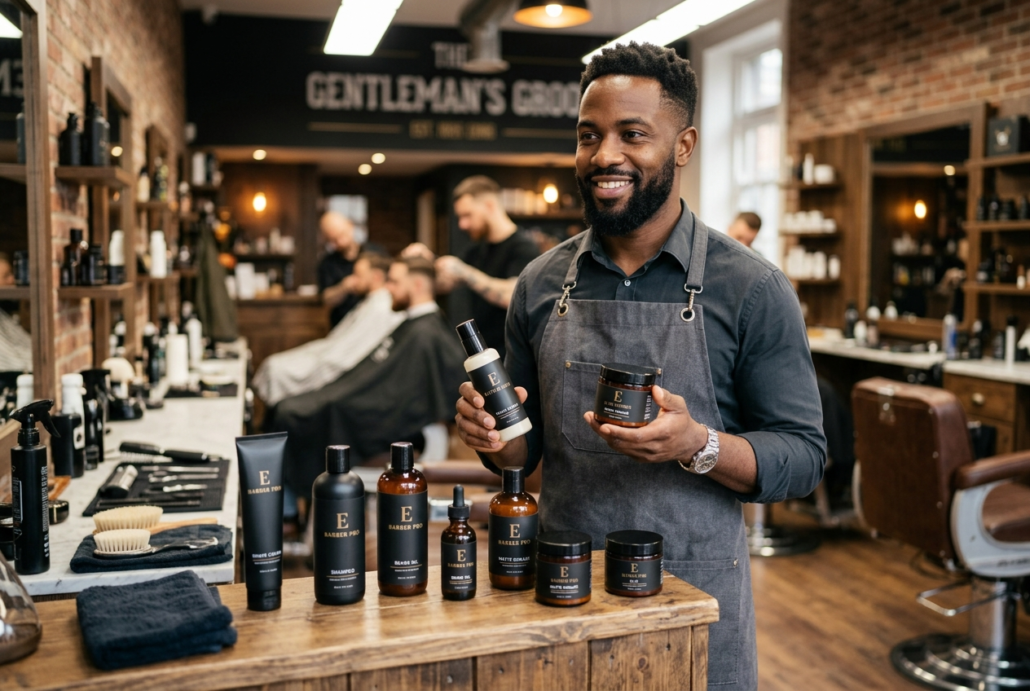
A growing number of barbers are discovering that the real money isn’t just in the chair: it’s on the shelf. With the U.S. barbershop industry hitting an estimated $5.8 billion in revenue in 2024 and private label products becoming more accessible than ever, independent barbers are turning their shops into full-blown grooming brands. The formula is surprisingly straightforward: take the trust you’ve already built with clients, attach your name to a product line that matches your standards, and sell something that works between appointments. Some barbers are pulling in six figures from product sales alone, without opening a second location or hiring more staff. This isn’t a side hustle trend. It’s a fundamental shift in how barbers think about their businesses, and the ones moving early are building real equity in a space that used to cap out at hourly service rates. The private label market itself reached $271 billion in U.S. sales in 2024, growing 3.9% over the previous year, and grooming products are one of the fastest-growing segments within it.
The Shift from Service Provider to Product Brand
Breaking the Ceiling of Hourly Service Rates
Every barber hits the same wall eventually. You can only raise your prices so much, and there are only so many hours in a day. Even at $50 per cut with a packed schedule, you’re looking at a hard ceiling of maybe $150,000 annually before expenses, and that assumes zero cancellations, no sick days, and no vacations. The math just doesn’t scale.
Product revenue changes the equation entirely. A pomade that costs you $3 to produce and sells for $18 generates profit while you sleep, while you’re cutting someone else’s hair, or while you’re closed on a Sunday. Multiply that across 200 loyal clients buying one product per month, and you’ve added a significant income stream without adding a single hour to your workday. The barbershop industry has been growing at a CAGR of 9.8%, and barbers who capture both service and product revenue are riding that wave harder than anyone.
Leveraging Client Trust for Retail Success
Here’s what most people outside the industry don’t realize: barbers already have the hardest part of brand-building figured out. They have a captive audience that trusts their recommendations. When you’ve been cutting someone’s hair for two years and you hand them a jar of pomade with your logo on it, that’s not a cold sale. That’s a warm endorsement from someone who literally touches their head every two weeks.
This trust-based selling model is why barber-owned brands often outperform generic products on a per-customer basis. Your clients aren’t comparing your product to 47 options on Amazon. They’re buying it because you told them it would work for their hair type, and you were right about the last three things you suggested.
Strategic Advantages of White Label Hair Care for Barbershops
Higher Profit Margins Compared to Third-Party Brands
Selling someone else’s brand off your shelf typically nets you 20-30% margins. Stocking a white label hair care product with your own branding on it? You’re looking at profit margins between 40% and 60%, sometimes higher depending on your price point. On a $22 retail jar of styling clay, that’s the difference between pocketing $5 and pocketing $12.
The distinction between white label and private label matters here. White label means you’re putting your branding on an existing, pre-formulated product. Private label gives you more control: you can customize the formula, choose specific ingredients, and create something genuinely unique to your brand. Both models work, but private label creates stronger differentiation and customer loyalty over time.
Full Control Over Brand Identity and Packaging
Your packaging tells a story before the customer ever opens the lid. Choosing between a matte black tin, a frosted glass jar, or a sleek squeeze tube isn’t just aesthetic: it positions your brand at a specific price point and communicates quality expectations. A heavy glass container with a minimalist label signals premium, while a plastic tube with bold graphics might appeal to a younger, streetwear-influenced clientele.
Manufacturers like Awilke Branding, which holds both GMP and ISO 22716 certifications, offer barbers the ability to customize everything from the formulation to the packaging materials without requiring massive upfront investment. This level of control used to be reserved for companies with six-figure R&D budgets. Now, with low MOQs starting at a few hundred units, a single barber can launch a line that looks and feels like it belongs on a boutique shelf.
Steps to Creating a Signature Pomade Line
Selecting the Right Formulations for Your Clientele
Creating a signature pomade line starts with knowing your clients’ hair. If your shop primarily serves clients with thick, coarse hair, you need a strong-hold, water-based pomade that washes out clean. If your clientele skews toward textured styles and loose crops, a matte clay or cream with medium hold makes more sense.
Scent is the silent brand ambassador. Citrus and bergamot blends read fresh and modern. Sandalwood and cedarwood lean classic and masculine. Whatever you choose, the fragrance should be distinctive enough that clients associate it with your shop. Work with your manufacturer to test essential oil combinations that hold their scent throughout the day without overwhelming. Most contract manufacturers will send sample batches so you can test formulations on actual clients before committing to a production run.
Navigating Minimum Order Quantities and Manufacturing
MOQs are where many barbers stall out. They assume they need to order 5,000 units to get started, which would mean a $15,000-$20,000 outlay before selling a single jar. The reality is more accessible. Many private label manufacturers now offer MOQs as low as 100-500 units, which means you can test a product with a $500-$2,000 initial investment.
Your first order should be conservative. Start with one hero product: a pomade, a styling clay, or a beard oil. Prove the concept with your existing clients. Once you’ve validated demand and dialed in the formula based on real feedback, expand to a second and third product. Awilke Branding, for example, supports this kind of phased approach with custom formulation services and flexible order quantities, which is exactly the model that works for independent barbers testing the waters.
How to Scale a Barber Shop Business Beyond Haircuts
Implementing In-Chair Sales Techniques
The most effective product sales happen during the service itself. When you’re applying a finishing product to a client’s hair, narrate what you’re doing. “I’m using our matte clay here because your hair has some natural wave, and this gives you that texture without looking like you tried too hard.” Then place the product on the counter in front of them before they pay.
Train every barber in your shop on product knowledge. They should know the hold level, the finish type, and the ideal hair types for each product. A quick five-minute training session each week keeps the whole team sharp and turns every chair into a point of sale.
Expanding into E-commerce and Subscription Models
Your shop has a geographic limit. E-commerce doesn’t. With 70% of barbershops now using online booking software, the infrastructure for digital sales is already in place. Adding a simple Shopify store or even selling through Instagram DMs can extend your product reach far beyond your zip code.
Subscription models are particularly powerful for grooming products. A client who uses one jar of pomade per month is a perfect candidate for a $20/month auto-ship. You get predictable recurring revenue, they never run out of product, and your customer lifetime value increases dramatically. Even 50 subscribers at $20/month adds $12,000 in annual revenue with minimal effort after setup.
Marketing Your Private Label Brand for Long-Term Growth
Using Social Media to Build Community Around Products
Social media is where barber brands live or die. As one industry analysis puts it, modern barbershops are treating social media like a growth engine, building communities, showing off skills, and turning casual scrollers into paying clients. The same applies to product marketing.
Short-form video content works exceptionally well for grooming products. Film a 30-second clip showing the application process, the hold throughout the day, and the final look. Real hair, real results, no filters. These videos outperform polished ads because they feel authentic, and authenticity is the currency barbers trade in. Encourage clients to tag your brand when they style their hair at home. User-generated content builds social proof faster than any paid campaign.
The Future of Professional Grooming Brands
The barbers building private label brands today are positioning themselves for a market that’s only getting bigger. The line between barber and brand founder is blurring, and the ones who move now will have years of brand equity, customer data, and product development experience that latecomers can’t replicate overnight.
Expect to see more barber-owned brands on retail shelves, in subscription boxes, and across international markets. The tools are available, the margins are strong, and the trust is already built. If you’ve been thinking about launching your own product line, the barrier to entry has never been lower. Awilke Branding works with independent brand founders to develop custom grooming products from concept to shelf, with GMP-certified manufacturing and MOQs designed for small-batch launches. Request a free quote to see what’s possible for your brand.
Frequently Asked Questions
- What’s the difference between private label and Custom Formula for barber products?
Private label means applying your branding to an existing, pre-developed formula – faster to market, lower cost, and ideal for first-time launchers who want to test demand before investing in development. Custom formula gives you full control: you can adjust the hold strength, finish, fragrance, and active ingredients to create something genuinely unique to your brand. The main trade-offs with custom development are a slightly higher MOQ and a longer lead time – typically 8-14 weeks compared to 4-6 weeks for stock formulas. For most barbers launching their first line, starting with a private label stock formula and moving to custom development once you’ve validated demand is the smartest path.
- How much does it cost to start a private label pomade line?
With low MOQ manufacturers, you can start for $500-$1,500 for your first product, including formulation, packaging, and an initial batch of 100-500 units. Costs decrease per unit as order quantities increase.
- Do I need a license to sell my own grooming products?
Requirements vary by region. In the U.S., cosmetic products don’t require FDA pre-approval, but you must comply with FDA labeling regulations and ensure your products are safe. Working with a GMP and ISO 22716 certified manufacturer helps ensure compliance.
- How long does it take to go from concept to finished product?
Typical lead times range from 4-8 weeks, depending on whether you’re using a stock formula or developing a custom formulation. Sample development usually takes 2-4 weeks, with production following after approval.

 How to Launch Private Label Hair Products for Your Salon